
Apple Stock Falls as Memory Cost Surge Squeezes Margins, Posing First Big Test for CEO Ternus
Apple beat earnings expectations but warned that soaring memory prices will push gross margins to their lowest level in two years, sending shares down 3%.
By Pavel Henderson ·
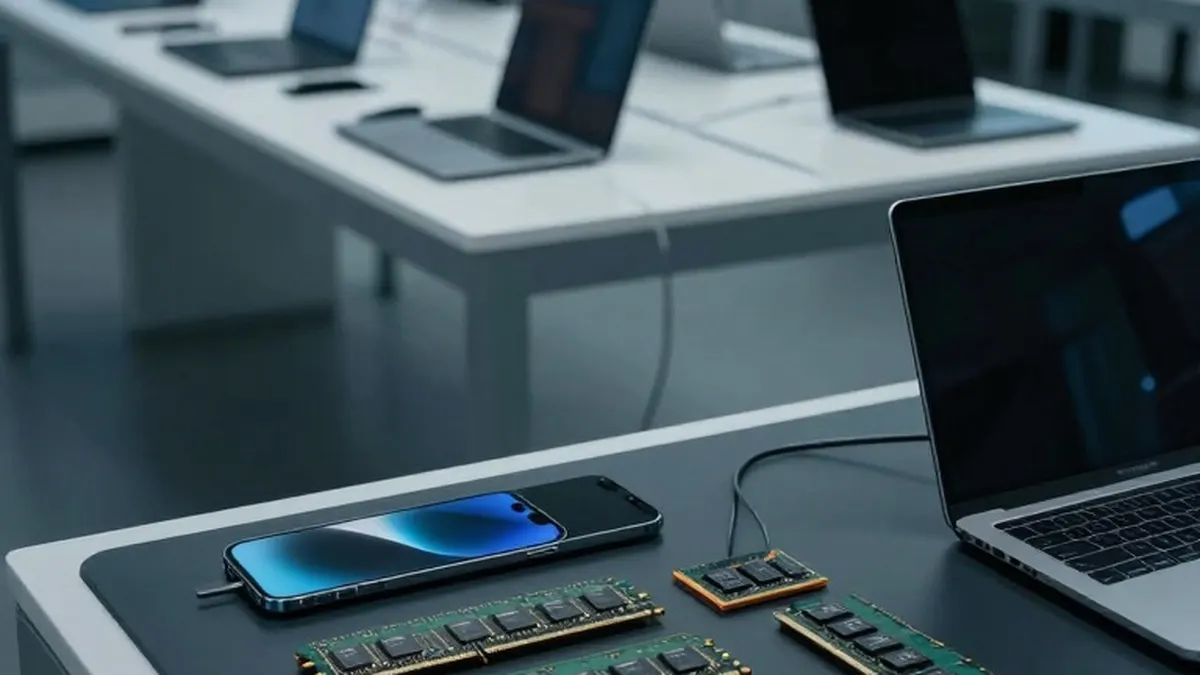
Apple's first earnings report under new CEO John Ternus delivered better-than-expected results on Monday, but a disappointing gross margin forecast tied to the global memory shortage sent the company's shares down 3% in morning trading on Tuesday.
The iPhone maker topped Wall Street estimates on both earnings and revenue, including in its core iPhone business, and even projected sales for the current period above analyst forecasts. But just before Ternus opened the earnings call to questions, Chief Financial Officer Kevan Parekh delivered the bad news: gross margin for the December quarter, which covers the holiday season, is expected to land between 45% and 46%, trailing the 46.3% average analyst estimate, according to LSEG.
"This includes primarily the impact of higher memory costs, as well as some costs related to the ramp of Siri AI," Parekh said.
The forecast extends a downward trend for Apple as it absorbs soaring costs from the worldwide memory crunch. A margin decline in the fiscal first quarter would be the company's third consecutive drop, following gross margins of 50.1% in the June period and 47.9% in the September quarter, the latter boosted by 1 percentage point of tariff refunds. At the midpoint of the guided range, Apple's gross margin would be its lowest since the fiscal fourth quarter of 2023.
"What we're seeing with memory pricing right now is unprecedented," Ternus told analysts, noting that Apple is paying more than it did earlier this year. "Looking beyond the December quarter, we see the pricing for memory purchases continuing to increase."
Ternus, who took over from Tim Cook on Sept. 1, is confronting a problem his predecessor spent his final months addressing. Cook described the memory situation as a "hundred-year flood" in a June interview with The Wall Street Journal, and Apple later raised prices across Macs, iPads and accessories. In September, the company increased iPhone prices by $100, a move Ternus said was made "reluctantly."
The pain extends across the industry. On Friday, Intel suffered its worst market day since the 1970s after issuing a weak forecast tied to the softening PC market. The root cause is insatiable demand for artificial intelligence: AI server giants such as Nvidia and hyperscale cloud companies are buying up all the RAM they can find and paying premium prices, leaving little supply for smartphone and tablet makers. Apple said it expects supply constraints on iPhones and Macs during the holiday quarter, driven primarily by memory.
To address the crunch, Ternus had top lieutenants field component questions on the call. Chief Operating Officer Sabih Khan became the first Apple COO to appear on an earnings call since Cook did so in 2010, when Steve Jobs was CEO. "As we have said before, we're seeing less flexibility in the supply chain than normal," Khan said, adding that Apple has sharply increased its purchase obligations to secure supply. Those obligations rose by $33 billion from the June quarter to the September period, though Khan declined to say whether Apple had signed "long-term agreements" with memory makers. "We're always working hard to improve supply," he said.
Despite the recent slide, Apple's margins remain well above earlier levels. During the first part of the Cook era, gross margin reliably came in between 38% and 39%, before the growth of the profitable services business pushed it past 40% in 2021. Some analysts also see a silver lining in the current turmoil: because Apple is better positioned to absorb part of the higher costs, they predict it could take market share from Windows PC and Android phone makers that lack such a cushion.
Ternus suggested those gains are already materializing, citing third-party research. "According to IDC, we gained share globally for the quarter and for the full fiscal year," he said. "And we have never sold more Macs in a fiscal year than we did this time, which is a truly remarkable testament to these incredible products."
Source: CNBC
More News · National news · Report a business · Got a Story?