Low-altitude airspace becomes a new frontier for security challenges
Security experts warn that the democratization of drone technology is creating a new layer of complexity in low-altitude airspace, demanding better coordination of detection and response systems.
By Haruka Ivanov ·
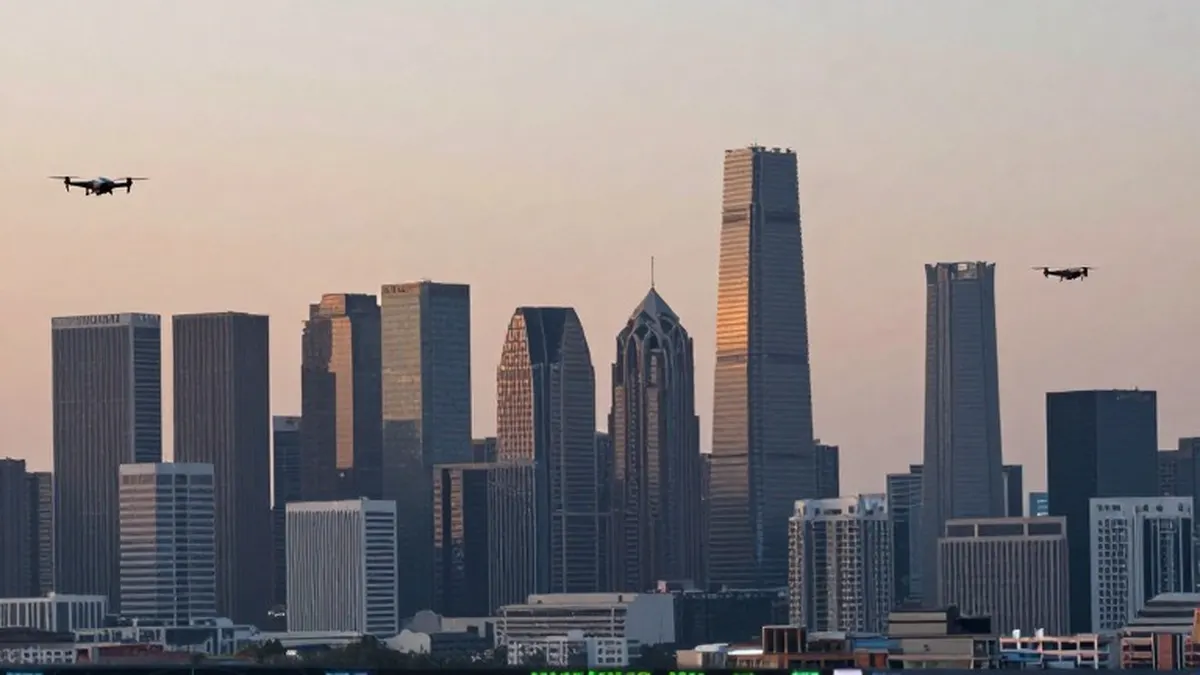
The rapid proliferation of drone technology is transforming the security landscape, creating a new challenge for defense officials who must manage an increasingly crowded and complex low-altitude environment. Unlike traditional aerial threats, modern drones often utilize commercially available components, allowing individuals, criminal groups, and hostile states to deploy sophisticated capabilities with far fewer resources than in the past.
Brig.-Gen. Yaron Rosen, who serves as executive chairman of Airwayz and previously held senior command roles in the Israeli Air Force and the IDF Cyber Command, compares this shift to the early days of cybersecurity. He describes the current situation as a democratization of airspace, noting that the ability to fly objects has become accessible to a much wider range of actors over the last decade.
Rosen highlights that autonomous systems, robotics, and edge computing have significantly lowered the barriers to entry for airborne operations. Capabilities once reserved for military and government entities are now within reach of commercial operators, public safety agencies, and hobbyists. He observes that flying objects have become smaller and more aggressive in the past five years, moving away from the large, crewed aircraft of the past.
The implications of this trend extend well beyond military conflict. Criminal organizations and cartels are increasingly utilizing drones, while critical infrastructure such as airports, ports, nuclear facilities, and major international events face persistent aerial risks. Rosen argues that this changes the nature of sovereignty, as security is no longer limited to land and sea but must now include the air.
A primary challenge for security forces is not merely acquiring new sensors and interceptors, but effectively coordinating the data from existing systems. Rosen emphasizes that operators need to make sense of the vast amount of information generated by various detection tools to form a coherent picture of the airspace.
Airwayz addresses this need through its OVERWATCH platform, a command-and-control system that integrates data from radars, cameras, and radio-frequency sensors. Rather than manufacturing its own hardware, the company focuses on creating a common operational picture for military and civilian security organizations, including police forces and infrastructure operators that may lack specialized airspace personnel.
The platform is designed to learn the characteristics of the monitored airspace, distinguishing between normal activity, such as bird migration and standard airport operations, and potential threats. It also incorporates legal frameworks and rules of engagement to assist operators in making informed decisions during incidents.
Airwayz has implemented its technology at the Port of Rotterdam to manage drone operations and has secured the skies over recent FIFA games. The company is also working to address interoperability issues within NATO, a critical concern as member states adopt diverse counter-drone systems from different manufacturers and countries.
During a recent NATO exercise, the OVERWATCH platform was integrated with more than 45 sensors, effectors, and command-and-control systems. Rosen noted that the exercise highlighted the difficulties of coordinating equipment from various sources. The company achieved SAPIENT compliance, an interoperability standard that facilitates communication between different systems. Rosen stated that military officials provided feedback during the event, and the platform was updated the following day to address their concerns.
While European governments are increasingly recognizing the drone threat, Rosen suggests that the level of urgency varies across the continent. He notes that countries on the eastern flank are feeling the pressure more acutely. As drones become cheaper and easier to operate, the focus for security forces is shifting from simple detection to the complex task of coordinating effective responses in a shared airspace.
Source: The Jerusalem Post