25 Years Ago: The $399 Pocket Library
Apple’s 2001 launch of the 5GB music player redefined portability, storing 1,000 songs in a device the size of a deck of cards.
By Haruka Ivanov ·
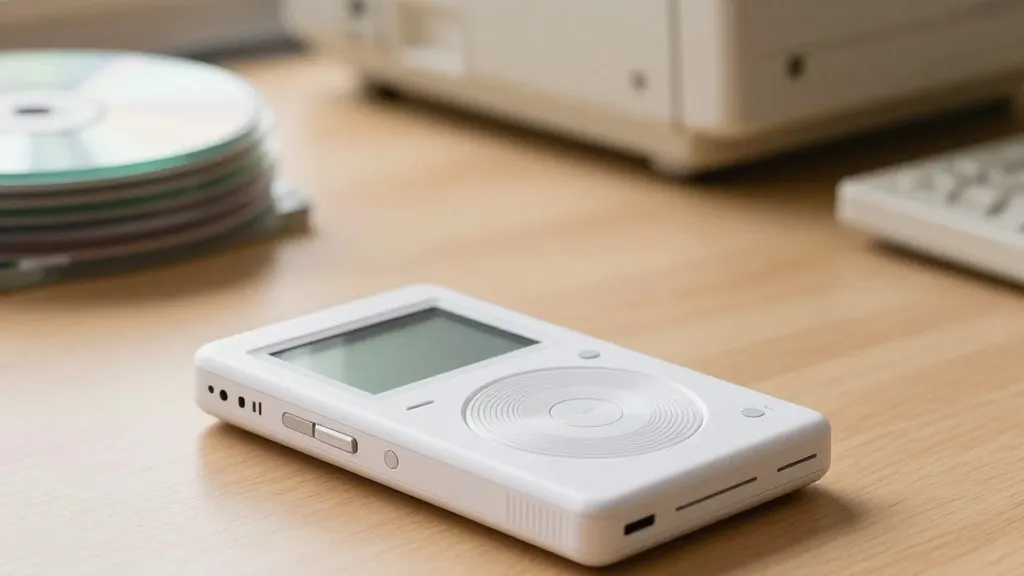
For two and a half decades, the standard for carrying a personal music collection has been set by a device that first appeared 25 years ago this month. On October 23, 2001, Apple introduced a product that promised to fit a user's entire library into a pocket-sized form factor for $399. This price point and storage capacity marked a significant shift in how consumers accessed audio, moving away from the limitations of CD players and early flash drives. The device’s debut signaled the beginning of a new era for portable electronics, where convenience and storage density took precedence over traditional hardware constraints.
The core appeal of the original iPod was its 5GB hard drive, which could hold approximately 1,000 typical pop songs encoded at 160Kbps. Apple CEO Steve Jobs described this capacity as representing the entire music library for most people. The hardware achieved this density by utilizing a 1.8-inch ultra-compact hard drive from Toshiba, which was just 0.2 inches thick. This component allowed the final product to measure 2.4 by 4 by 0.78 inches and weigh 6.5 ounces, a size comparable to a standard deck of playing cards and lighter than the cell phones of that era.
Performance was bolstered by a FireWire 400 connection, which Apple marketed as the fastest method for transferring music. Jobs claimed that a full CD of MP3s could be transferred in five to 10 seconds, a stark contrast to the estimated five minutes required for USB transfers of the same data. Filling the device with 1,000 songs would take roughly 10 minutes via FireWire, compared to five hours on a USB-based player. The device also featured 20 minutes of skip protection and a rechargeable lithium-polymer battery that provided 10 hours of continuous playback and could reach 80% charge in an hour.
User experience was centered on a single-hand scroll wheel with tactile feedback, designed for quick navigation by artist or playlist. This hardware was paired with the launch of iTunes 2, which introduced Auto-Sync functionality. This feature ensured that music libraries curated on a Mac were automatically synchronized with the portable player during charging or data transfer. The integration of hardware and software was intended to simplify the process of managing digital music, establishing the Mac as the central hub for a user's digital lifestyle.
The launch occurred at a pivotal moment for Apple, following its recovery from the dot-com bubble burst with the success of the iMac and Mac OS X. Jobs positioned the iPod as the next essential component in a connected digital ecosystem, joining devices like digital cameras and DVD players. Although competitors like Sony and Creative had existing portable players, Jobs argued that none had yet found the correct formula for digital music. The first song demonstrated at the unveiling was 'Building a Mystery' by Sarah McLachlan.
The original model paved the way for a product line that would dominate the market for nearly two decades. The iPod coexisted with the iPhone, which launched in early 2007, for over ten years. However, the rise of smartphones eventually made dedicated music players redundant. The last model, the 7th-generation iPod Touch, was released in May 2019, though the product line was not officially discontinued until May 2022. Today, the 2001 device stands as a landmark in consumer technology, having fundamentally changed how people listen to music on the go.
Source: Tom's Hardware · original report published