Black conservative nonprofit promotes Jewish solidarity and Israel support in Michigan
CURE’s signs and billboards arrive as Michigan Senate candidates Abdul El-Sayed and Mike Rogers compete for Black and Jewish voters.
By Pavel Henderson ·
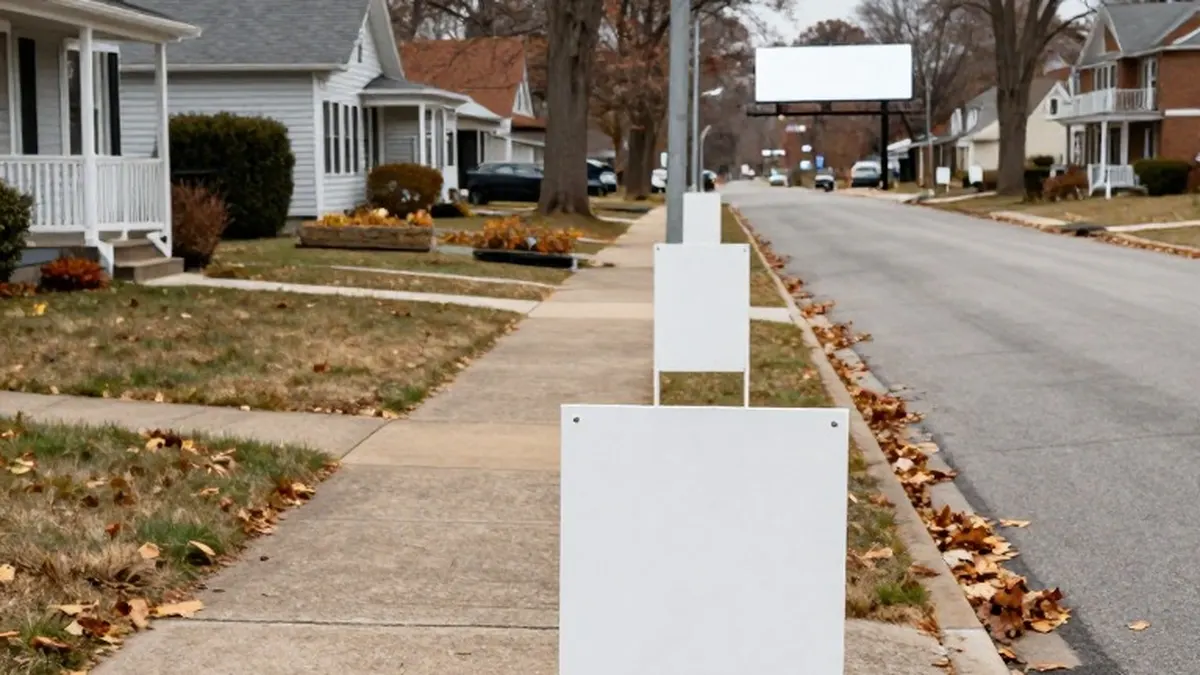
A Black conservative nonprofit is promoting solidarity with Jews and support for Israel across Michigan as a contentious US Senate campaign reaches its conclusion. The Center for Urban Renewal and Education, known as CURE, has funded yard signs in cities with large Black populations, including Detroit, Flint and Ypsilanti, alongside billboard advertising aimed at Black voters.
The Washington, DC-based organization’s yard signs call for Black and Jewish communities to stand together. Its billboards defend Israel’s right to exist and reject the characterization of self-defense as genocide. CURE director Star Parker told the Jewish Telegraphic Agency by email that the campaign seeks to remind Black Christian voters of particular reasons to support Israel. None of the signs or billboards identifies a candidate.
The messaging comes as Democratic Senate nominee Abdul El-Sayed works to consolidate support among two constituencies traditionally associated with his party. His statements about Israel and Jewish safety have alienated many Jewish voters, while his efforts to secure Black support have also faced difficulties. A Detroit News-commissioned poll in the race’s closing days, however, suggested that 87 percent of likely Black voters would back him.
Republican candidate Mike Rogers has sought support from both Black and Jewish voters. Advertising supporting Rogers has highlighted tensions between local Black and Arab communities, and a new super PAC linked to him has spent heavily on ads accusing El-Sayed of disrespecting and misleading Black voters. Detroit reporter Sam Robinson, who works for a historic Black newspaper and has interviewed scores of Black voters, told the Columbia Journalism Review that some distrust reflects perceptions that Arab communities are taking resources that should go to Black residents.
CURE’s signs appeared during the campaign’s final week, following an October 22 interfaith roundtable it organized in Detroit. Black pastors and Rabbi Aaron Bergman of Adat Shalom, a Conservative synagogue in suburban Farmington Hills, discussed the history of Black-Jewish organizing. That longstanding alliance has faced strains in recent years. Bergman told JTA by email that the gathering was intended primarily to educate participants about antisemitism, rather than focus on politics.
El-Sayed has devoted much of his closing campaign effort to Black voters, visiting Black churches and appearing at events with former president Barack Obama and South Carolina Rep. Jim Clyburn, a senior Black congressional leader. Strong turnout in Black communities is considered central to his prospects of winning the Senate seat.
A late endorsement of Rogers by pro-Israel Democratic Rep. Haley Stevens introduced another uncertainty. Parker told JTA she expected many Black Christian voters to follow Stevens’ decision, arguing that the endorsement would strengthen their support for Rogers because of Israel.
Other developments suggest Palestinian rights may carry greater weight with Michigan’s Black voters this year than previously. In August, pro-Palestinian state Rep. Donavan McKinney, a democratic socialist, defeated a pro-Israel incumbent in a congressional primary in a majority-Black district near Detroit. During a Detroit stop in Stevens’ primary campaign, a Black community organizer also directly challenged her support for Israel.
Source: The Times of Israel