Dinosaur Skeleton Fetches $47.3 Million At New York Auction
The Nanotyrannus specimen, nicknamed Jodi, sold Tuesday after a 12-minute bidding process involving six prospective buyers.
By Haruka Ivanov ·
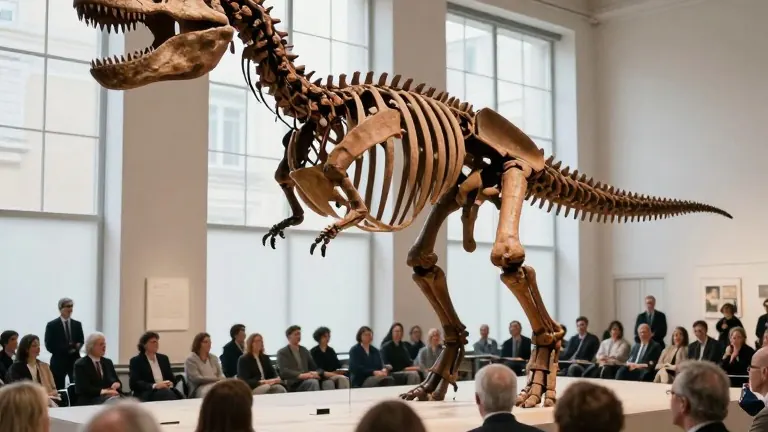
A skeleton of a small T. rex relative sold for $47.3 million at a Sotheby's auction in New York City on Tuesday, far exceeding the auction house's estimate of $6 million to $9 million. The sale places the specimen, nicknamed Jodi, among the most expensive dinosaur fossils ever purchased.
The bidding for Jodi involved six prospective buyers participating online and by telephone. The live auction lasted about 12 minutes, and the buyer who purchased the skeleton has not been identified. Sotheby's said the purchaser outbid five other interested parties.
Jodi is a Nanotyrannus, a genus that stood about half the height of an adult Tyrannosaurus rex. Research published last year determined that Nanotyrannus is a distinct dinosaur genus rather than a juvenile T. rex. The two species lived together during the Cretaceous period approximately 67 million years ago. Nanotyrannus possessed longer forelimbs, larger hand claws, and thinner teeth than the T. rex.
The skeleton measures 9 feet 6 inches tall and extends nearly 20 feet in length. Sotheby's described the specimen as being almost 70 percent complete. It is one of only three known Nanotyrannus skeletons. The auction house displayed the skeleton at its upper Manhattan headquarters beginning earlier this month.
Jodi is named for Jodi Pierson, a Montana rancher who found the fossil on her property in 2019. The excavation of the specimen was featured in the 2020 Discovery Channel program Dino Hunters. Cassandra Hatton, Sotheby's head of science and natural history, said the team's commitment to understanding and preserving the specimen made the sale possible.
Some scientists have expressed opposition to the sale of such fossils to private collectors. These researchers argue that specimens like Jodi belong in museums where the public can view them and scientists can conduct studies. The sale price ranks second among dinosaur fossil auctions, following the $50.1 million sale of a T. rex skeleton named Gus earlier this year.
A Nanotyrannus is not a Tyrannosaurus rex. Research published last year identified Nanotyrannus as a distinct genus.
Source: ABC7 Los Angeles