Great Salt Lake Restoration Targets 40% Water Cut by 2034
Ecologist Ben Abbott argues that a 40% reduction in usage is necessary to prevent ecological collapse, citing the rapid decline of similar water bodies in Iran and California.
By Pavel Henderson ·
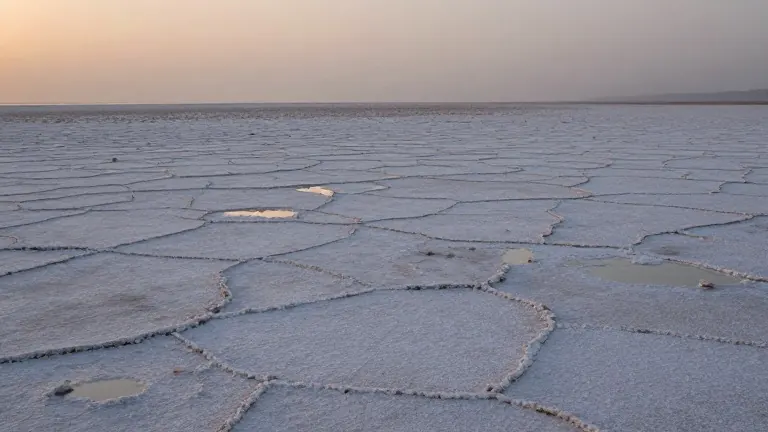
The Great Salt Lake is currently 30% full, sitting 15 feet below its optimum height. For Ben Abbott, a BYU ecology professor and executive director of Grow the Flow, this deficit represents a critical threshold that demands a 40% reduction in water usage to restore the ecosystem. Abbott argues that without this specific cut, the lake will face irreversible damage similar to the decline of other major saline lakes.
Abbott’s urgency stems from the rapid disappearance of Lake Urmia in Iran, a body of water comparable in nature to the Great Salt Lake. Following international sanctions related to Iran’s nuclear program, the government diverted rivers to support agriculture. Within 12 years, Lake Urmia dried up entirely. The region subsequently experienced higher temperatures, abandoned agricultural fields, dry wells, and clusters of cancer and neurodegenerative diseases linked to toxic dust from the exposed lake bed. Abbott points to this timeline as a direct warning for Utah.
Closer to home, California offers a parallel example where salt lakes have reduced to a fraction of their former size. These local precedents reinforce Abbott’s view that the loss of the Great Salt Lake will trigger a cascade of environmental and health issues. He identifies specific consequences including increased dust storms that degrade air quality, a rise in regional temperatures, and the disappearance of 12 million migratory birds that rely on the lake for rest. Additionally, the brine shrimp industry, which produces half the global supply of table shrimp, stands to collapse, and the snowpack that supports Utah’s ski tourism will diminish.
To reverse this trajectory, state politicians have set a goal to restore the lake to healthy levels by the 2034 Winter Olympics. The federal government has committed at least $1 billion to the effort. Philanthropists, including the Marriott, Eccles, Miller, and Romney families, are contributing millions to support the initiative. On the ground, farmers, homeowners, and municipalities are showing receptivity to compensation-for-conservation programs that would reward reduced water use.
Abbott cites a Harvard study indicating that Utah has the highest levels of societal trust of any state in the country. He believes this social capital, combined with financial resources, positions the region to attempt something unprecedented: the successful restoration of a saline lake. No community has previously achieved this feat.
The path forward requires coordinating political, philanthropic, and public sectors. Abbott notes that the growing synergy among these groups provides the momentum needed to meet the 2034 target. The plan relies on reducing water usage by the required 40% to ensure the lake reaches its optimal height before the global audience arrives for the Winter Games.
Source: Deseret News