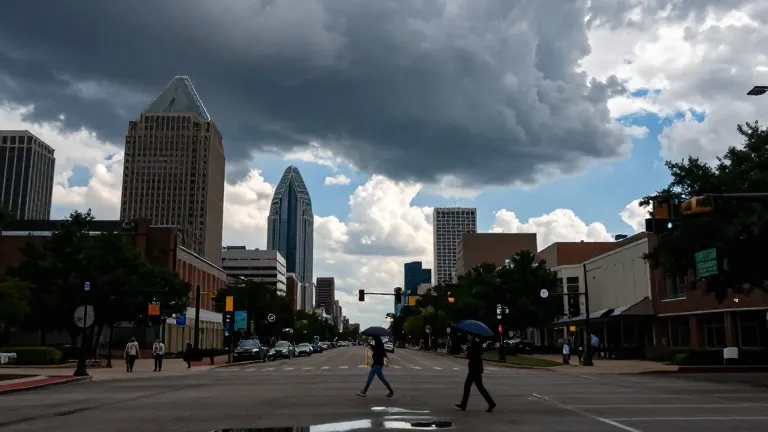
Houston heat index reaches 90 degrees Sunday
AccuWeather data shows a 12-degree spread between actual air temperature and the perceived heat index for the city on November 1.
By Haruka Ivanov ·
The perceived temperature in Houston, Texas, will reach 90 degrees Fahrenheit on Sunday, November 1, despite an actual high of only 82 degrees Fahrenheit. According to AccuWeather, the heat index remains at 90 degrees Fahrenheit for both the maximum and minimum readings throughout the day.
The discrepancy between the air temperature and the heat index results from high humidity levels. The meteorological report projects a daytime high of 82 degrees Fahrenheit and a nighttime low of 70 degrees Fahrenheit. This 12-degree gap illustrates how moisture affects the thermal experience for residents.
Rain remains unlikely across the city on Sunday. The probability of precipitation is estimated between 1 percent and 7 percent. The sky will feature a mix of clouds and clear periods. Wind speeds will peak at 5.59 mph during the day and drop to 4.35 mph at night.
Daylight hours will be limited, with sunrise occurring at 6:35 a.m. and sunset at 5:35 p.m. These times align with the seasonal shift toward shorter days in the northern hemisphere.
Houston’s climate is influenced by its proximity to the Gulf of Mexico, which sustains relative humidity levels between 50 percent and 90 percent. This moisture content causes the air to feel warmer than the thermometer indicates. The city’s annual average precipitation totals 39 inches.
Local weather patterns typically range from 49 degrees Fahrenheit in winter to 90 degrees Fahrenheit in summer. June, July, and August are the warmest months, while December, January, and February are the coldest. The region faces a moderate risk of natural disasters, particularly during hurricane season.
Air quality in Houston is generally good, though industrial activity from local refineries can impact air composition. Summer months often see elevated ozone levels, which present challenges for individuals with respiratory conditions. The city also maintains emergency protocols for tornadoes and floods, though hurricanes and flooding are more frequent threats.
Source: La Opinión