
Boston Dynamics staff challenge robot dog contract with ICE
More than 300 employees signed a petition opposing a $1.3 million deal to sell modified Spot robots to federal agents.
By Kavya Lin ·
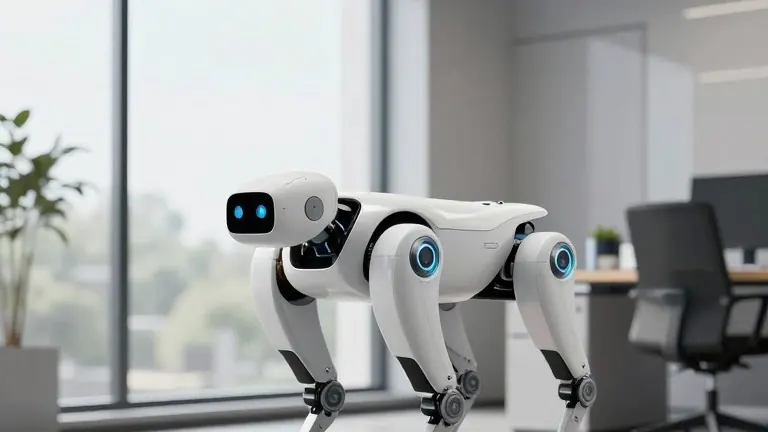
A quiet office at the robotics giant is now the site of an internal dispute over who gets to pilot their machines.
The conflict began on September 25 when the Department of Homeland Security awarded a contract to a Connecticut firm named Radeco. The $1.3 million deal was intended to provide modified versions of Boston Dynamics’ quadruped robots to Immigration and Customs Enforcement. Boston Dynamics executives quickly defended the transaction, noting that the robots were not being weaponized. However, the company’s own workforce moved fast to object. In early September, workers delivered a petition letter to leadership. The document carried more than 300 signatures, with half of the signatories remaining anonymous. Copies of the letter were also sent to The Boston Globe and WBUR public radio station.
The petition reflects a shift in how staff view their public role. Signatories described themselves as people who typically enjoy showcasing their innovations to friends and family. They expressed shock at the partnership, citing messages from loved ones who asked in disbelief if the news was true. The letter argued that the risk to the company’s reputation was too high to ignore. "The risk for Boston Dynamics is simply too great to continue with this deal," the petition stated. The 300 signatures represent a meaningful portion of the company’s total workforce, which numbers approximately 1,400 people.
The hardware at the center of the debate is a specialized upgrade known as Cerberus. Radeco modified four Spot robots to create this platform. The contract specifies that the Cerberus units are designed to detect radiation, toxic gas leaks, and explosive threats in urban settings or disaster zones. The system also supports remote observation and inspection tasks. A key feature is an oxygen sensor intended to verify air quality before personnel enter confined spaces like tunnels. The robot is also equipped with a camera offering 30 times zoom capability, 360 degree cameras, and infrared thermal imaging.
The next step is for Boston Dynamics executives to decide whether to proceed with the delivery. The contract remains in effect, and the four modified robots are ready for deployment under the current agreement.
Source: Ars Technica
More Business · Watch Your Wallet · Report a business · Got a Story?