Breaking: Election Day is here! Make your selections: The fight for Congress and the cost of living
Voters head to the polls today to decide the balance of power in Congress, driven by concerns over high prices, health care costs, and the war in Iran.
By Kavya Lin ·
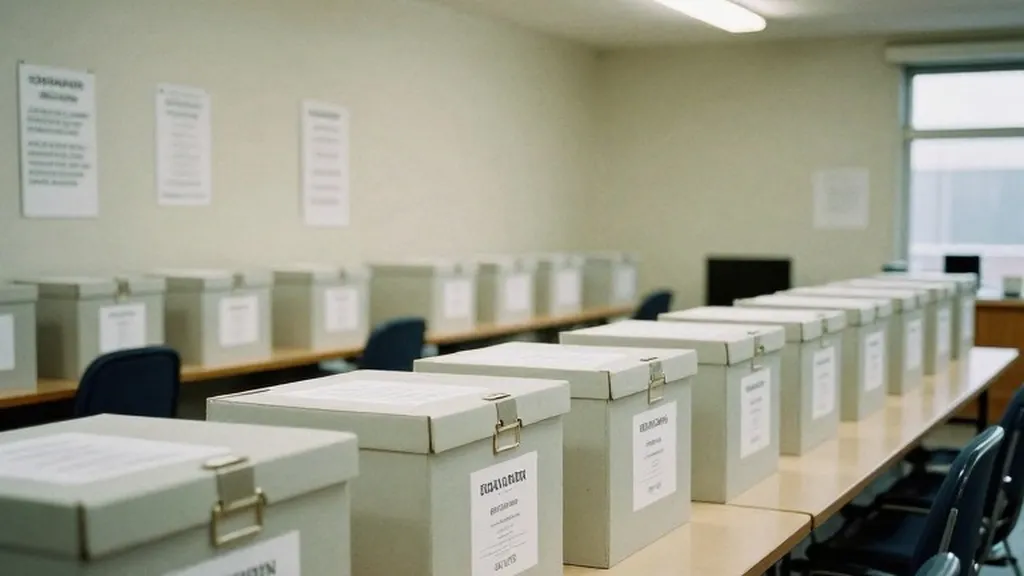
Election Day has arrived, and the nation is turning out to decide who will control Congress for the final two years of President Donald Trump's second term. According to the Associated Press, this midterm election is being viewed as a referendum on the president's performance, with many voters struggling with high prices and expressing anger over the unpopular war with Iran. More than 57 million people had already cast their ballots as of Monday, surpassing the early vote totals from four years ago in many closely watched states. Today, the remaining voters will head to the polls to make their choices in a race that could significantly shape the legislative agenda for the next two years.
The stakes are high in both chambers of Congress. In the U.S. House, all 435 seats are up for grabs. Democrats need a net gain of three districts to secure a majority, while Republicans can afford to lose no more than two seats. Ballotpedia counts 46 battleground districts, with 25 held by Democrats and 21 by Republicans. In the Senate, 35 seats are at play, including 33 regular elections and two special elections. Democrats require a net gain of four seats to take control, whereas Republicans can lose only two. Additionally, 36 governorships are on the ballot, with Democrats hoping to hold a majority of these offices for the first time in two decades. The results of these races will determine the balance of power in the federal government for the remainder of the president's term.
The mood among Democratic figures is one of cautious optimism, driven by a belief that voters are ready for change. Rep. Suzan DelBene, the chair of the Democratic Congressional Campaign Committee, stated that the American people are angry and want change. This sentiment is reflected in polling data from the AP and NORC, which shows that 35% of U.S. adults approve of Trump's job performance, while 25% approve of his handling of the economy. About seven in 10 Americans say the country is heading in the wrong direction, and most blame the president for high prices. If Democrats win even one chamber, investigations and possible impeachment proceedings become likely, according to political analysts. This potential shift in power could also boost the profiles of potential 2028 presidential candidates, including Gavin Newsom, JB Pritzker, and Pete Buttigieg.
For many voters, the decision to support a particular party or candidate comes down to personal financial pressures. James Moore, a 57-year-old librarian in Raleigh, North Carolina, summed up the feelings of many Americans when he said, I'm paying more taxes. I'm paying more for my healthcare. I'm paying more for everything. These concerns about the cost of living and health care are central to the Democratic agenda. House Democratic Leader Hakeem Jeffries, who would become the first Black speaker if Democrats win the House, has outlined a 100-day agenda focused on addressing the cost of living and overseeing the administration. This agenda aims to tackle the economic challenges that have frustrated voters and to hold the administration accountable for its policies.
The Republican Party is bracing for the possibility of losing the House while fighting to hold the Senate. RNC Chairman Joe Gruters emphasized that everything depends on turnout, stating that if they can turn out their voters, they will win. The Republican money advantage has been a significant factor in this election cycle. According to an AP analysis of AdImpact data, the 2026 elections are likely to be the most expensive in history. Republican committees outraised and outspent Democratic committees, aided by Trump-affiliated groups and Elon Musk. Notably, 88.1% of Republican general election TV ad spending went to states and districts that Trump won in 2024, including more than $850 million in areas where he won by 10 points or more. Despite this financial edge, Democrats outraised their opponents at the candidate level, suggesting a strong grassroots effort in key districts.
Redistricting has played a significant role in shaping the competitive landscape. Six states, including California, Florida, Missouri, North Carolina, Tennessee, and Texas, are using new congressional maps following mid-decade redistricting. Ohio also has a new map. These changes have created new battlegrounds and altered the dynamics of many races. However, Republicans hoped to beat the traditional midterm pattern, where a president's party almost always loses seats, by using redistricting to their advantage. Yet, new districts in Florida and elsewhere may not vote as they were drawn, adding an element of uncertainty to the outcome. The Trump administration has also been actively involved in election administration, filing lawsuits in Alaska and California related to the certification of election results and the handling of ballots cast by suspected noncitizens.
The war in Iran has been a major point of contention for voters. The AP describes the election as a referendum on Trump's second term, with voters angry over the conflict. The administration's handling of the war has been a key issue in many of the most competitive races. In Maine, for example, economic strain and tariffs have made the state competitive, according to the AP. The race between Sen. Susan Collins and Democratic former state Senate President Troy Jackson is seen as a bellwether for the broader economic concerns facing voters. Similarly, in Georgia, Sen. Jon Ossoff is facing Republican Rep. Mike Collins in a race that is leaning Democratic, according to recent ratings. These races highlight the intersection of foreign policy and domestic economic concerns in this election.
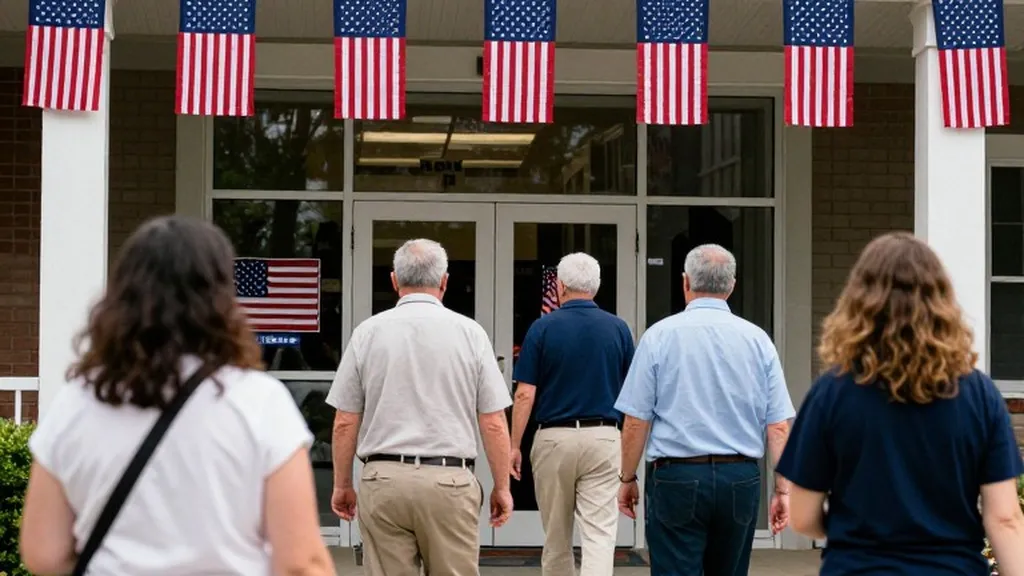
Voters across the country are heading to the polls today to make their selections. Poll hours vary by state, so it is important for voters to check the specific times for their area. For example, polls in Alabama are open from 7 a.m. to 7 p.m., while in Alaska, they are open from 7 a.m. to 8 p.m. In California, polls are open from 7 a.m. to 8 p.m., though the state largely votes by mail. In New York, polls are open from 6 a.m. to 9 p.m. Voters can find their polling place at vote.gov or by checking with their state election office. Anyone in line when polls close is entitled to vote, so voters should not hesitate to join the line, even if they arrive late in the day. ID rules vary by state, so it is advisable to check the specific requirements before heading to the polls.
The U.S. Postal Service has added hours, staff, and special lines to ensure that mail ballots are counted on time, according to Reuters. This is particularly important in states that rely heavily on mail voting, such as California, Colorado, Hawaii, Nevada, Oregon, Utah, Vermont, and Washington. The timely counting of mail ballots is crucial for determining the final results of the election. In addition to the legislative races, voters will also be deciding on various ballot measures and local offices, though the national focus remains on the control of Congress and the governorships.