
China's Profit Split Deepens as AI Firms Outrun Consumer Sectors
National Bureau of Statistics data released Tuesday shows a sharp divergence between advanced manufacturing earnings and household-facing industries.
By Haruka Ivanov ·
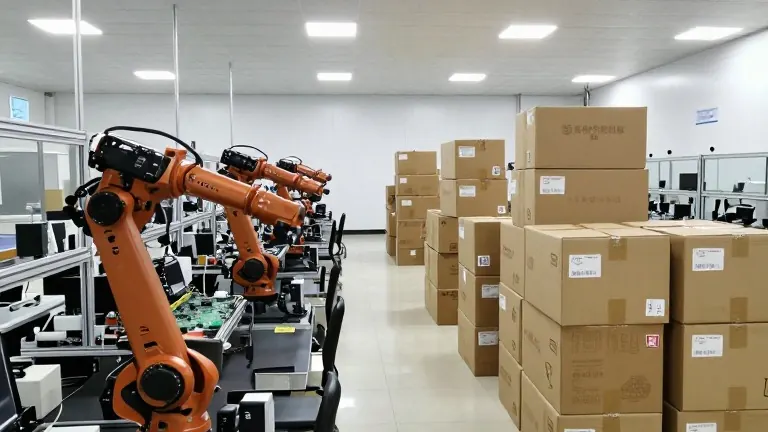
China's large industrial firms posted a 14.4% profit increase in September compared to the same month last year, the fastest rate recorded since June, according to figures released Tuesday by the National Bureau of Statistics. The data arrives as manufacturing tied to artificial intelligence expands while domestic consumer demand remains soft.
The NBS data shows profit growth concentrated in specific supply chains. Makers of electronic special materials saw profits more than triple, while semiconductor device equipment makers posted a 51.7% gain. Building out computing capacity and data centers drove profits for optical fiber manufacturers up more than sixfold, and cable makers saw profits more than double over the first nine months of the year.
Copper and aluminum producers recorded profit increases of nearly 45% over the same nine-month period. These advances stand against weaker conditions elsewhere. Yu Weining, NBS chief statistician, attributed the growth primarily to electronics and advanced technology manufacturing.
Consumer-facing industries reported smaller gains. Clothing, autos, and furniture manufacturers trailed high-tech sectors in profit growth. Retail sales increased 1.1% in September, a figure that beat forecasts but sat only slightly above August's reading.
Shena Yue, a senior economist at Oxford Economics, identified household demand as the economy's weak point. High-tech manufacturing investment and electronics capacity utilization remain resilient, while overall investment and industrial utilization remain subdued, she said. "China's export strength isn't able to fully offset its domestic weakness," Yue said.
Beijing has held back from new major stimulus aimed at domestic demand amid concerns over local government debt and fading consumer trade-in subsidies. Dan Wang, China director at Eurasia Group, said policymakers see no urgency to act because falling prices have raised purchasing power and officials are relying on tech exports to hit this year's growth target.
Wang noted that most manufacturers earn "very thin" profits and some operate at a loss, while consumers continue saving rather than spending amid what she called the most severe employment crisis in decades. Strains have surfaced in financial markets as well: doubts about the breadth of corporate profitability pushed the benchmark CSI 300 Index into a bear market late last week.
Source: CNBC
More Business · National news · Watch Your Wallet · Report a business · Got a Story?