Right-Hand Drive Dilemma: Tesla Ends Cybertruck Ambitions in the Pacific
Seven years after collecting deposits, Tesla is refunding Australian and New Zealand customers, citing the high cost of engineering a right-hand drive version for a niche market.
By Haruka Ivanov ·
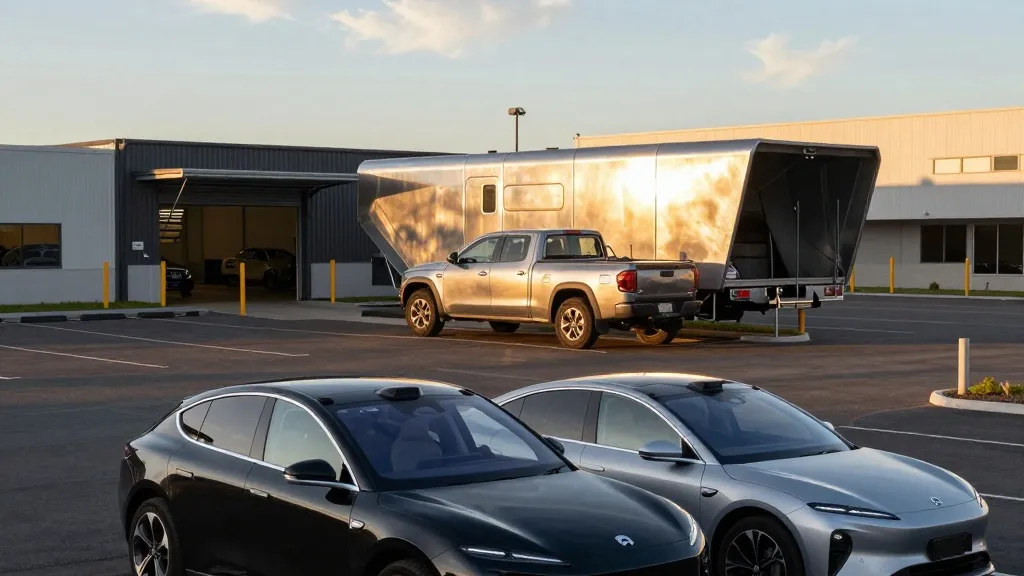
The central conflict in Tesla's international strategy has always been one of engineering economics versus market desire. For customers in Australia and New Zealand, that tension has now been resolved in their disfavor. The electric vehicle maker has officially ended its plan to produce the Cybertruck for these two right-hand drive markets. Reservation holders received notification today that their orders are void, ending a waiting period that has stretched to nearly seven years. This decision highlights a broader struggle for Tesla to justify the significant investment required to adapt its most polarizing vehicle for regions that drive on the left.
The timeline of this delay is as significant as the cancellation itself. Interest in the Cybertruck began in November 2019, when Australian consumers started paying A$150 to reserve the vehicle. For four years, the reservation page remained active, creating an expectation of delivery. In May 2022, Tesla quietly closed the page and replaced it with a button to sign up for updates, but it did not refund the deposits at that time. The situation became more ambiguous in 2024 when the company shipped a single unit to Australia for a display tour. That same year, CEO Elon Musk told shareholders that certification for other markets might happen the following year. That promise went unfulfilled, and the right-hand drive version never materialized.
The core issue is mechanical and regulatory. The Cybertruck is manufactured exclusively in left-hand drive. To sell it in Australia, New Zealand, the UK, or Japan, the vehicle requires a complete re-engineering of the cockpit layout. Australia also mandates certification under its own specific design rules. This is a substantial financial undertaking for a vehicle that is currently facing soft demand in North America. Tesla has chosen to avoid this expense rather than risk a loss on a product line that is not scaling as anticipated.
The financial data supports the decision to pull back. Tesla’s international launches to date have been limited to left-hand drive markets. Deliveries began in South Korea late last year and in the UAE in January, with configurators now available in Saudi Arabia, Qatar, Jordan, and Israel. The truck remains blocked from entering the European Union primarily due to pedestrian safety standards. In the United States, sales have slowed considerably. In the third quarter of 2026, Tesla delivered 8,295 units in the category labeled "Other Models," which now almost exclusively represents Cybertrucks since production of the Model S and Model X has ended. Analysts estimate that this equates to a pace of roughly 30,000 units per year, a fraction of the 250,000 annual capacity of the production line.
For a company managing global logistics, a 30,000-unit annual run rate makes it difficult to justify the capital expenditure needed for a right-hand drive program serving a combined population of approximately 33 million people. The move is also a strategic pivot. By canceling the truck reservation, Tesla is attempting to convert that dead order into a sale of a vehicle it already builds for the region, specifically the Model 3 or Model Y. To sweeten the deal, the company is offering a free one-year subscription to Full Self-Driving (Supervised) for anyone who makes the switch. Refunds for the original deposits will be processed within 30 days.
This cancellation follows the release of Tesla’s third-quarter 2026 earnings, suggesting that the financial pressure is a key driver. The company had previously seen a surge in global interest, with crowdsourced data from 2020 placing Australia as the third largest market for reservations, behind the US and Canada. By 2023, global reservation counts had reached approximately 2 million. However, the vehicle that eventually arrived was more expensive and offered less range than initially promised, further complicating the value proposition for international buyers who would face additional import costs.
The outcome confirms that the Cybertruck is now a niche product with a primarily American customer base. While some customers may have already canceled their pre-orders due to the changing specifications, the formal notification serves as a definitive end to the uncertainty. For Tesla, the focus remains on finding buyers for the existing left-hand drive inventory rather than expanding the vehicle's geographic footprint through costly engineering changes. The decision to prioritize right-hand drive models like the Model Y over the Cybertruck reflects a pragmatic approach to international market share.
For the 3% of global reservations that were based in Australia, the wait is finally over, though not in the way they hoped. The refund process begins immediately, and the company is actively marketing its other available models to those former reservation holders. This shift underscores a broader trend in the electric vehicle industry, where manufacturers are increasingly focusing on high-volume, proven designs over experimental vehicles that face significant regulatory and engineering hurdles in specific regions. The Cybertruck’s journey in the Pacific has come to a close, leaving a legacy of long waits and a clear message about the limits of current production strategies.
Source: Electrek · original report published
More Business · Watch Your Wallet · Report a business · Got a Story?