U.N. Peacekeeping Mission in Western Sahara Ends After 35 Years
A Security Council deadlock between the U.S. and Russia forced the abrupt withdrawal of the force, leaving the disputed desert region without a monitoring body.
By Pavel Henderson ·
The United Nations ceased its 35-year peacekeeping operation in Western Sahara on Sunday. The abrupt end followed a stalemate in the Security Council between the United States and Russia over the future of the desert territory. The withdrawal leaves the region without a neutral monitoring force amid ongoing tensions between Morocco and the pro-independence Polisario Front.
Stephane Dujarric, the spokesperson for the U.N. secretary general, announced the start of the liquidation period on November 1, 2026. A smaller team under the United Nations Department of Operational Support will manage the transfer of assets to troop-contributing countries. The team will also handle the disposal of U.N. equipment.
The mission concluded after a failed vote in the Security Council on Friday. Russia vetoed a U.S. draft resolution that supported Morocco's claim to sovereignty and proposed ending the mission the following year. A rival Russian resolution to extend the mandate was subsequently rejected. The disagreement resulted in the immediate expiration of the force's authorization.
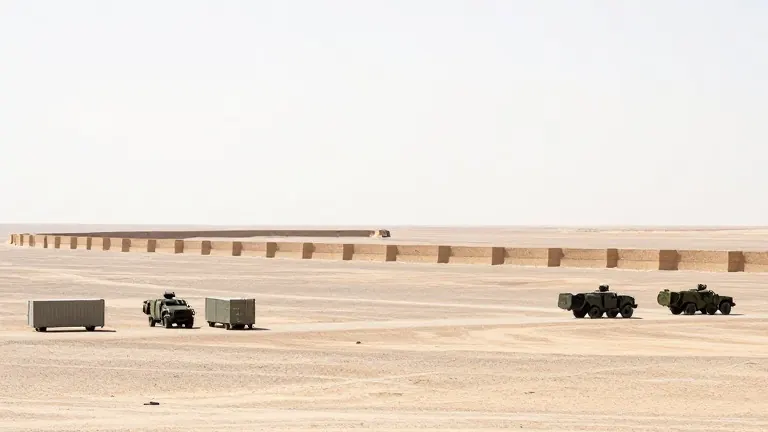
Western Sahara is a territory roughly the size of Colorado along the northwestern Atlantic coast of Africa. It is rich in minerals and fisheries. Morocco controls nearly all of the land, excluding a narrow strip east of a sand barrier. The Polisario Front, supported by Algeria, claims the territory as the homeland of the Indigenous Sahrawi people. The group operates from refugee camps in Tindouf, Algeria.
The dispute dates back to 1975, when Morocco annexed the territory after Spanish rule ended. An armed conflict followed, lasting more than 15 years and resulting in more than 16,000 deaths on both sides, according to the French Senate. A U.N.-brokered cease-fire took effect in 1991, leading to the creation of the U.N. Mission for the Referendum in Western Sahara, or MINURSO. The plan called for a referendum on self-determination, but the vote never took place due to disagreements over voter eligibility.
The Moroccan royal palace described the non-renewal of the mission as a move to internationalize the dispute. The Polisario Front labeled the decision unacceptable. The Algerian foreign ministry expressed profound regret and criticized the U.S. draft for excessive bias. Morocco has secured support from Western capitals including Washington, Paris, and London, while the Polisario has seen its international backing dwindle.
The mission was authorized to deploy 534 personnel. Its budget for 2026-2027 exceeded $62 million. Egypt, Ghana, and Pakistan were the top military contributors. Twenty personnel lost their lives during the operation. The U.N. secretary general called on all parties to exercise maximum restraint and promote the rights of the people of Western Sahara.
The Polisario Front withdrew from the cease-fire in 2020 after clashes. The U.N. reported last month that the territory remains a scene of low-intensity hostilities. The end of the mission risks further straining relations between Morocco and Algeria, which severed diplomatic ties in 2021. Algiers hosts the Polisario and views full Moroccan sovereignty as a diplomatic defeat.
Source: WFAE