Breaking: Election Day is here! Make your selections: your vote on prices, health care and war decides who checks the White House
Polls are open across the country for the midterms that will decide control of Congress, with Democrats framing the day around the cost of living, health care and oversight of the administration.
By Kavya Lin ·
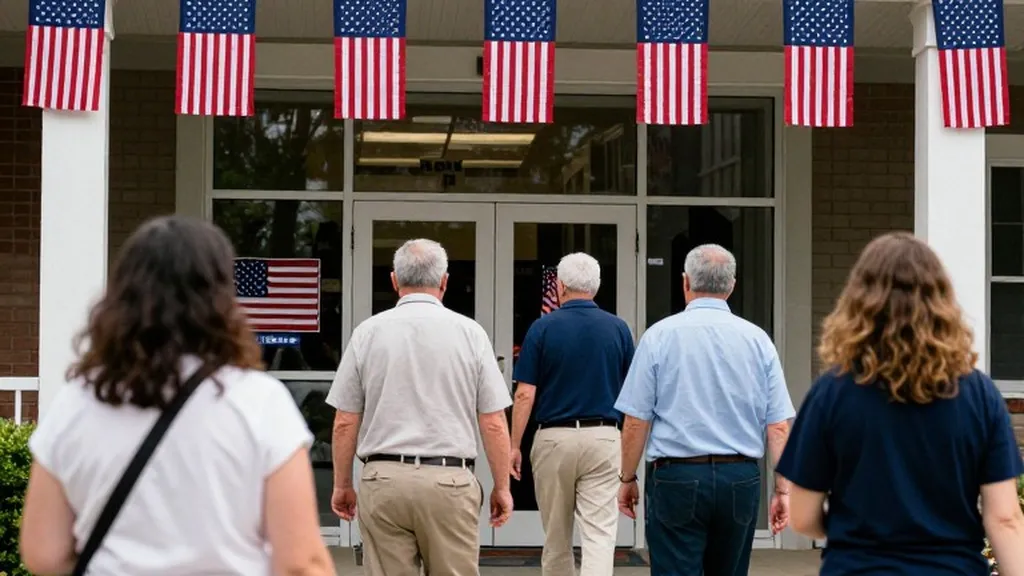
Polls are open this Election Day, Tuesday, November 3, 2026, for the midterm election halfway through President Donald Trump's second term, and every seat in the U.S. House, 35 Senate seats and 36 governorships are on the ballot. According to the Associated Press, the day amounts to a referendum on Trump's second term, with voters struggling with high prices and angry over an unpopular war with Iran. Your vote today decides who controls Congress for the final two years of this administration, and whether there is any check on it at all.
The stakes are concrete. In the House, all 435 seats are up, according to Ballotpedia. Republicans hold 218 seats, Democrats hold 214, and there is one independent, with vacancies. Democrats need a net gain of three districts for a majority, while Republicans can lose no more than two. Ballotpedia counts 46 battleground districts, 25 held by Democrats and 21 held by Republicans, and 60 House incumbents, 23 Democrats and 37 Republicans, did not run again.
In the Senate, 35 of 100 seats are up, Ballotpedia reports: 33 regular elections plus two special elections for the rest of the terms Marco Rubio of Florida and JD Vance of Ohio were elected to in 2022. Republicans hold 53 seats, Democrats hold 45, and two independents caucus with Democrats. Democrats need a net gain of four seats for a majority; Republicans can lose only two. Winners begin six-year terms on January 3, 2027.
Thirty six governorships are also being decided. Heading in, Republicans hold 26 governor's offices and Democrats 24, and each party defends 18 of the offices on the ballot, according to Ballotpedia. Democrats would need a net gain of two governorships for a nationwide majority, which Republicans have held since 2010. Democrats hope to hold a majority of governorships for the first time in two decades.
The mood on the ground is captured by voters themselves. James Moore, 57, a librarian in Raleigh, North Carolina, told the Associated Press: "I'm paying more taxes. I'm paying more for my healthcare. I'm paying more for everything." That is the message Democratic leaders are carrying into the day. "The American people are angry. They want change," said Rep. Suzan DelBene, chair of the Democratic Congressional Campaign Committee. If Democrats win even one chamber, investigations and possible impeachment proceedings become likely, and House Democratic Leader Hakeem Jeffries would be the first Black speaker. Jeffries has outlined a 100 day agenda focused on the cost of living and oversight of the administration.
The obstacles are real. According to the Associated Press, the 2026 elections will likely be the most expensive in history. Republican committees outraised and outspent Democratic committees, helped by Trump affiliated groups and Elon Musk, though at the candidate level Democrats outraised their opponents. An AP analysis of AdImpact data found that 88.1 percent of Republican general election TV ad spending went to states and districts Trump won in 2024, including more than $850 million where he won by 10 points or more. Republicans also turned to mid decade redistricting to beat the midterm pattern, and new congressional maps are in use today in California, Florida, Missouri, North Carolina, Tennessee and Texas, with Ohio also using a new map, according to Ballotpedia. New districts in Florida and elsewhere may not vote as drawn.
The Senate map is the tougher climb, and it runs through states Trump carried. Ballotpedia lists 13 battleground Senate races. In North Carolina, an open seat after Thom Tillis retired, Democratic former Gov. Roy Cooper faces former Republican National Committee chair Michael Whatley. In Georgia, Sen. Jon Ossoff, a Democrat, faces Republican Rep. Mike Collins in a state Trump won by 2.2 points in 2024. In Ohio, Democratic former Sen. Sherrod Brown faces Republican Sen. Jon Husted in the special election. In Michigan, Republican former Rep. Mike Rogers faces Democrat Abdul El-Sayed, and on Sunday El-Sayed's former primary opponent Haley Stevens endorsed Rogers. In Texas, Republican Attorney General Ken Paxton, whom Trump backed over Sen. John Cornyn in the primary, faces Democrat James Talarico. In Maine, Sen. Susan Collins, a Republican, faces Democratic former state Senate President Troy Jackson, and the AP says economic strain and tariffs have made the state competitive. In New Hampshire, Democratic Rep. Chris Pappas faces former Republican Sen. John E. Sununu for the seat Jeanne Shaheen is retiring from. Race ratings as of October 27 from Cook, Decision Desk, Inside Elections and Sabato put Maine as a toss up on all four, with Iowa, Kansas, Alaska and Michigan ranging from toss up to lean, and Georgia leaning to likely Democratic.
Governor races carry their own weight, especially for health care and the cost of living closer to home. Democrats defend five governorships in states Trump won in 2024: Arizona, Kansas, Michigan, Pennsylvania and Wisconsin. Republicans defend two in states Kamala Harris won: New Hampshire and Vermont. In Georgia, Republican health care executive Rick Jackson faces Democratic former Atlanta Mayor Keisha Lance Bottoms to succeed Brian Kemp. In Nevada, Republican Gov. Joe Lombardo faces Democratic Attorney General Aaron Ford. In Ohio, Republican Vivek Ramaswamy faces Democrat Amy Acton; Ramaswamy's campaign faced backlash over an ad featuring Acton's estranged mother. The AP also calls Texas, Florida and Iowa competitive governor races.
More than 57 million people had already voted as of Monday, according to the Associated Press, surpassing the early vote of four years ago in many closely watched states. Republicans were bracing to lose the House and fighting to hold the Senate, and the AP reports that one or two seats could tip either chamber. Democrats were cautiously optimistic. Republican National Committee Chairman Joe Gruters said: "Everything depends on turnout. If we turn out our voters, we win, and that's what we've been planning for." Trump held dozens of rallies, ending Sunday in Salina, Kansas, where he told the crowd: "I really want you to pretend I'm on the ballot." Many Republican candidates kept their distance from him.
Voting rights are also on the line today. According to Reuters, a federal judge on Monday temporarily barred the Trump administration from carrying out a plan it says would prevent noncitizen voting; critics say the plan risks disenfranchising eligible voters and infringes on states' authority over elections. A judge also ordered the administration on Monday to stop demanding that California election officials segregate ballots cast by people on its lists of suspected noncitizens. Trump has continued to make false claims about voting fraud, including that noncitizens vote in large numbers, and Democrats fear interference and intimidation as the Justice Department threatens to prosecute local election officials, according to the AP. The U.S. Postal Service added hours, staff and special lines so mail ballots are counted on time, Reuters reports.