Netanyahu Faces Eisenkot in Israel's Tightest Election
Over 7 million Israelis voted Tuesday in a fragmented race where early turnout hit its highest level since 1981, leaving the outcome to coalition math rather than a single party majority.
By Haruka Ivanov ·
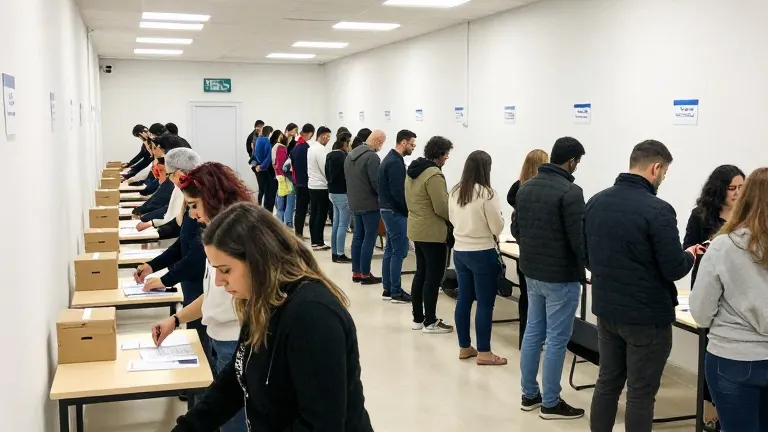
Israelis cast ballots Tuesday in a national election that pits Prime Minister Benjamin Netanyahu against former military chief Gadi Eisenkot.
The contest began with the Hamas attack on October 7, 2023, which triggered the current war in Gaza and regional conflicts. This is the first national vote since that date. The campaign focused heavily on security, military conscription, and the role of religious parties in government.
Tens of thousands of overseas voters traveled to Israel to cast ballots. In Kiryat Shmona, a northern border town, one voter tore down an Eisenkot poster before polling places opened. In Tel Aviv, families of victims from October 7 observed a moment of silence. Yona Adam, whose daughter Mapal Adam was killed, told the crowd, “Remember all those whose voices are no more.”
Initial figures from the Central Elections Committee show almost 17% of eligible voters participated in the first three hours. That is the highest turnout by that time since 1981. Dean Livne, the acting director-general of the elections committee, stated that reports of irregularities were much lower than in previous elections. However, Eisenkot's Yashar party filed an urgent complaint about nine incidents where ballot slips were missing or damaged.
Netanyahu has not appeared in public three hours after polls opened. Eisenkot visited communities near Gaza that were attacked in 2023. He said, “If someone in the government had a shred of responsibility, they would start the morning here.”
No single party in Israel has ever won a parliamentary majority, so leaders must form coalitions. The outcome will depend on whether Netanyahu’s religious and ultranationalist bloc or the opposition group secures enough seats. If neither side reaches a majority, weeks of negotiations will follow. Arab-led parties, including the Ra’am party led by Mansour Abbas, could become kingmakers. Abbas said, “Our vote will change the government,” and hoped for over 70% turnout in Arab communities. Itamar Ben-Gvir, the national security minister, warned that if Netanyahu loses, it “will be Mansour Abbas’ government.”
Around 330,000 first-time voters, many facing compulsory military service, are eligible in this election. Supporters of Eisenkot argue his coalition will conscript ultra-Orthodox men and restore judicial independence. Netanyahu’s backers view him as a steady leader who has guided the country through multiple wars while protecting its Jewish identity.
Source: KNBC