Rosebank oilfield approval unlikely to break UK climate targets, sources say
Treasury pressure is mounting on the energy secretary to sign off the project, a move that could yield £500 million in annual tax revenue but remains contested within the cabinet.
By Haruka Ivanov ·
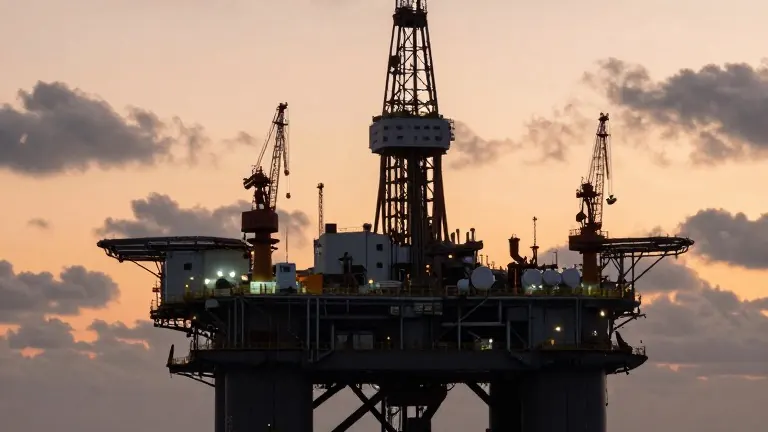
Government insiders told The Guardian that the massive Rosebank oilfield can receive final approval without causing the UK to miss its statutory emission targets. This assessment provides leverage to cabinet members who have been lobbying for the project to proceed.
The approval hinges on a technical interpretation of climate obligations. Once the crude oil is extracted and exported, the carbon dioxide released from burning it abroad is no longer recorded against domestic UK figures. One insider noted that Energy Secretary Miatta Fahnbulleh has more flexibility in her decision than public debate suggests.
The cabinet is currently divided on the issue. Fahnbulleh, who previously indicated a preference for rejecting the project, is now in friction with colleagues such as Chancellor John Healey. The Treasury has already included the projected tax revenue from Rosebank in its financial models. If the project is rejected, the department would face a revenue shortfall. Adura, the company operating the field, estimates these tax benefits will reach £500 million per year by the end of the current parliamentary session.
A 2024 court judgment forced the current government to re-evaluate the oilfield. The judge ruled that the previous consent granted by the Conservative administration was flawed because it failed to account for emissions from burning the oil, not just from the drilling process. While Rosebank is projected to add one million tonnes of carbon dioxide by 2042, this figure is small relative to the UK’s overall carbon limit of 90 million tonnes for that period.
Climate experts offer mixed views on whether the project violates the spirit of the Paris agreement. Greg Muttitt, a climate researcher at University College London, stated that the government was incorrect to approve the Jackdaw gasfield last week and would be wrong to approve Rosebank, which is expected to generate roughly seven times the emissions. However, Muttitt conceded that the UK would not face international legal penalties, as the majority of the oil will be consumed by other nations.
Environmental groups are pressing the prime minister to look at the bigger picture. On Tuesday, Greenpeace and Friends of the Earth sent a letter urging the government to consider the cumulative impact of multiple energy decisions, including North Sea drilling and heat pump grants, rather than treating them as isolated events. They argue that the shift of emissions to other countries is a minor distinction that does not solve the global temperature problem.
Fahnbulleh is bound by law to consider the UK’s commitment to limiting global warming to 1.5C. In her recent approval of the Jackdaw gasfield, she cited national energy security as the primary driver. Her allies argue that this justification does not apply as strongly to Rosebank, leading them to believe she is leaning toward rejection because the climate costs may outweigh the economic benefits.
Downing Street officials insist the final call belongs to Fahnbulleh, not Prime Minister Andy Burnham. However, supportive ministers interpret the prime minister’s recent calls for a pragmatic approach to energy and his focus on reindustrialisation as signals of support for the oilfield. Scottish Labour MPs are believed to be largely in favor of the project.
A spokesperson for the Department for Energy Security and Net Zero stated that the decision will follow a quasi-judicial process. The department said it will weigh all relevant evidence, including environmental assessments and public comments received during the regulatory period.
Source: The Guardian